|
 |
|
|
|||


|
 |
|

Jul. 10, 2026
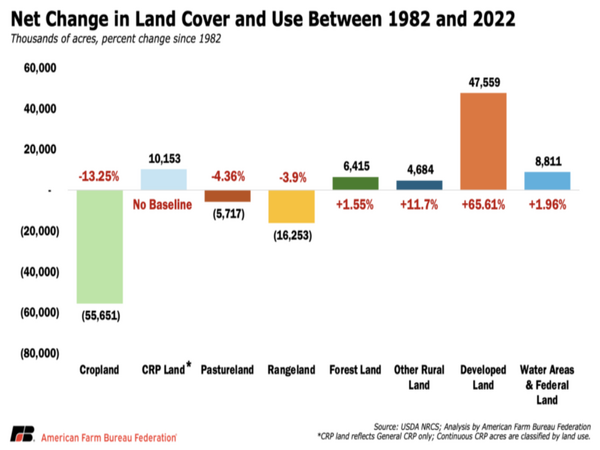
By Danny Munch, Economist, American Farm Bureau Federation Key Takeaways Since 1982, cropland, pastureland and rangeland have declined, while developed land has increased by nearly 48 million acres (66%), roughly the size of Nebraska. Acres moving between cropland, pasture and the Conservation Reserve Program may remain connected to agriculture, while land converted to housing, industrial sites, roads or other built uses is far less likely to return to production. In 2024, more than 2 million landowners rented out 347.8 million acres for agricultural purposes, with non-operating landlords controlling 79% of rented-out acres. More than a third of non-operating landlords are 75 or older, but less than 5% of owned farmland is expected to be sold or gifted in the next five years, leaving trusts, wills, heirs and lease decisions central to who can keep farming. Farmland pressure is often discussed as a national acreage-loss problem, but for farmers and ranchers the more immediate challenge is land access. Land can remain technically "agricultural" while becoming harder to rent, buy or keep in production. At the same time, acres converted to development, energy infrastructure or other built uses often do not return to farmland or ranchland. The U.S. is not facing a sudden farmland cliff, but agricultural land is being reshaped by two concurrent forces: physical land-use change and ownership transition. Some acres are shifting among cropland, pasture and the Conservation Reserve Program (CRP), while others are being permanently converted to development. Meanwhile, a large share of land used for farming is controlled by absentee landlords, raising questions about succession planning, access for young, beginning and new farmers, rental access and long-term affordability. Read More. Tweet |
|
|
|
|
|
|
|
|
|||||||||||||