|
 |
|
|
|||


|
 |
|

Aug. 17, 2026
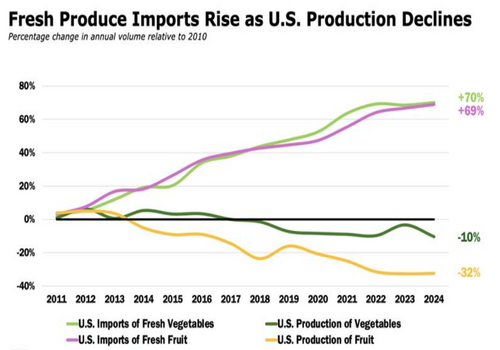
By Daniel Munch, Economist, American Farm Bureau Federation Key Takeaways *Labor, input and regulatory expenses have climbed sharply, making it harder for domestic produce growers to recover costs, invest in their operations, and keep up with consumer demand. Since 2010, U.S. fruit production has declined 32% and vegetable production has fallen 10%, while fresh fruit and vegetable imports have each increased about 70%. *Foreign supply still fills important seasonal gaps and supports year-round consumer demand, but imports are arriving in greater volumes during active domestic seasons, adding lower-cost competition when growers must market highly perishable crops. *Import pressure extends across a range of fresh produce markets. The pattern varies by commodity, from higher year-round import volumes for lettuce and cabbage to sharper overlap during important blueberry, strawberry and tomato harvest windows. Together, these examples show that growing competition is not confined to a single crop, region or season. *Growing dependence on foreign production can create food security risks. As U.S. production declines, more of the nation's fresh produce supply becomes exposed to political instability, extreme weather, food-safety disruptions and regulatory decisions governed by other countries. Trade will remain essential, but a resilient food system requires U.S. farmers to be able to profitably grow fruits and vegetables here at home. Fresh produce markets run on strict timing. Fruits and vegetables are highly perishable, harvest windows are often short, and growers generally cannot store a crop while waiting for prices to improve. A few weeks of excess supply can determine whether a season ends in profit or loss. Imports are an essential part of this system. They fill seasonal production gaps, support year-round consumer demand, and strengthen integrated supply chains. Yet the rapid growth of foreign supply, and its increasing overlap with active U.S. harvest periods, has created legitimate concerns about downward price pressure during the narrow windows when domestic growers must sell their crops. Those pressures are particularly difficult for U.S. growers facing rising labor, regulatory, input and compliance costs that are often difficult to pass on to buyers. These competitive challenges do not diminish the broader value of agricultural trade. Rather, it highlights the need for a trade environment that preserves reliable consumer access while ensuring U.S. growers have a viable opportunity to compete. Read More. Tweet |
|
|
|
|
|
|
|
|
|||||||||||||