|
 |
|
|
|||


|
 |
|

Sep. 21, 2026
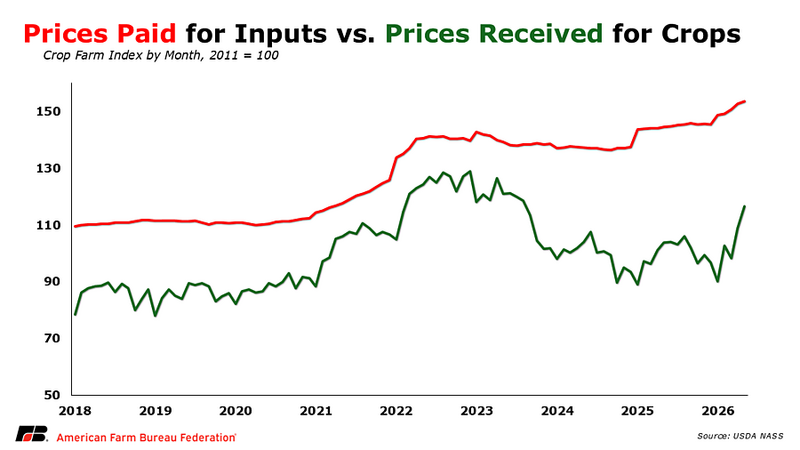
This Farm Bureau Market Intel was written by American Farm Bureau Federation in partnership with the American Bankers Association, American Soybean Association, Farm Credit Council, National Association of Wheat Growers, National Corn Growers Association, National Sorghum Producers and USA Rice. Key Takeaways •The farm economy has changed significantly in the eight years since the 2018 farm bill was written. •Farm production expenses have risen sharply, with higher interest rates increasing the cost of financing operations and capital purchases such as equipment and farmland. •Farm debt continues to climb as producers finance increasingly expensive inputs and assets, while working capital has come under pressure. •Higher farmland values have strengthened sector balance sheets, but rising land values and cash rents also increase the cost for beginning farmers or farmers who want to expand. •These trends reinforce the need for farm policy that reflects the current costs, risks and capital requirements of agriculture rather than those of nearly a decade ago. The 2018 farm bill was written for a very different farm economy. Since then, farmers and ranchers have navigated a global pandemic, supply chain disruptions, historic inflation and rapidly rising interest rates, resulting in a substantial increase in the cost of producing food, fiber and fuel. While commodity prices have increased at times, those increases do not cover the cost of production. Across several key measures, agriculture has become substantially more expensive and capital intensive since 2018. To read the entire report click here. Tweet |
|
|
|
|
|
|
|
|
|||||||||||||