|
 |
|
|
|||


|
 |
|

Oct. 15, 2026
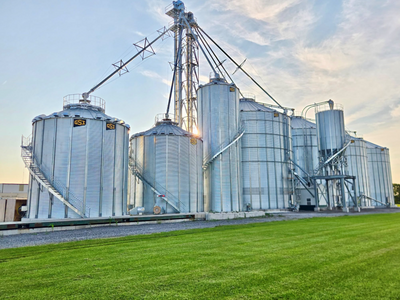
Source: GSI news release ASSUMPTION, Ill. -- Grain systems play a vital role in maintaining grain quality during storage and helping maximize return on investment. Evaluating system performance after harvest can help farmers determine whether upgrades are needed for next season, says Randy Sheley, grain conditioning specialist with GSI. He suggests five things to consider when giving your grain system a post-harvest checkup. Grain storage - Determine if existing storage capacity is sufficient to meet current and future needs. "Did you have bottlenecks this year created by a lack of storage?" Sheley asks. "Could you have earned more if you had more storage capacity?" He notes that it's also important to consider whether grain bins are located in the right place logistically. "If you have multiple fields, is there a location that's better suited for a storage setup--one that offers a good road system for efficient grain transport, access to utilities and room for future farm growth?" Grain drying capacity - Sheley recommends farmers consider their long-term drying capacity needs, at least for the next five years. "Farmers may expect higher yields or plan to add acres," he says. "In all my years, I've only had one customer who thought he bought a dryer that was too big." He says it's also important for growers to have the correct type of dryer for their operation. "If all of your bins are large--over 50,000 bushels--there is no reason to use full-heat dryers, because you can't manage hot grain in those big bins," he says. For large bins, Sheley recommends full heat and dry-cool dryers or a tower dryer, which will only run dry-cool and is simple to operate. Grain handling - High yields can put additional stress on grain-receiving equipment. "Farmers should evaluate how well their grain-handling equipment--including dump pits, grain legs and other conveyors--performed when loading and unloading grain," Sheley suggests. "If bottlenecks occurred, consider adding faster, higher-capacity handling equipment for next season to keep harvest operations moving efficiently." Technology - New smart grain management technologies are not only automating grain bin and dryer operations. They are also enabling producers to monitor their systems remotely, providing improved grain quality and peace of mind. One example is GSI's GrainVue system, which monitors grain temperature, moisture and inventory while also automating fans to cool, store or rehydrate grain. It also detects carbon dioxide (CO2), which can indicate the potential for grain spoilage. Sheley adds that advances in dryer control technologies can help avoid overdrying, which can cost farmers money in the long run. Safety - Post-harvest is also a good time to consider safety enhancements. Many improvements can be installed to existing bins and handling equipment at a relatively low cost to reduce the risk of entrapment, falls and mechanical injuries. Sheley says one of the most important safety measures is eliminating the need to enter a bin to inspect grain. "Most entrapments are due to grain quality issues," he says. "Make sure grain is dry and storable, and consider installing a bin monitoring system to help maintain grain in good condition. "Grain systems are among the best investments farmers can make to maximize grain quality and profitability," he adds. "Optimizing grain system performance is something to keep in mind when planning for 2027." For additional information, farmers can contact their grain system dealer or visit grainsystems.com. Tweet |
|
|
|
|
|
|
|
|
|||||||||||||