|
 |
|
|
|||


|
 |
|

Nov. 2, 2026
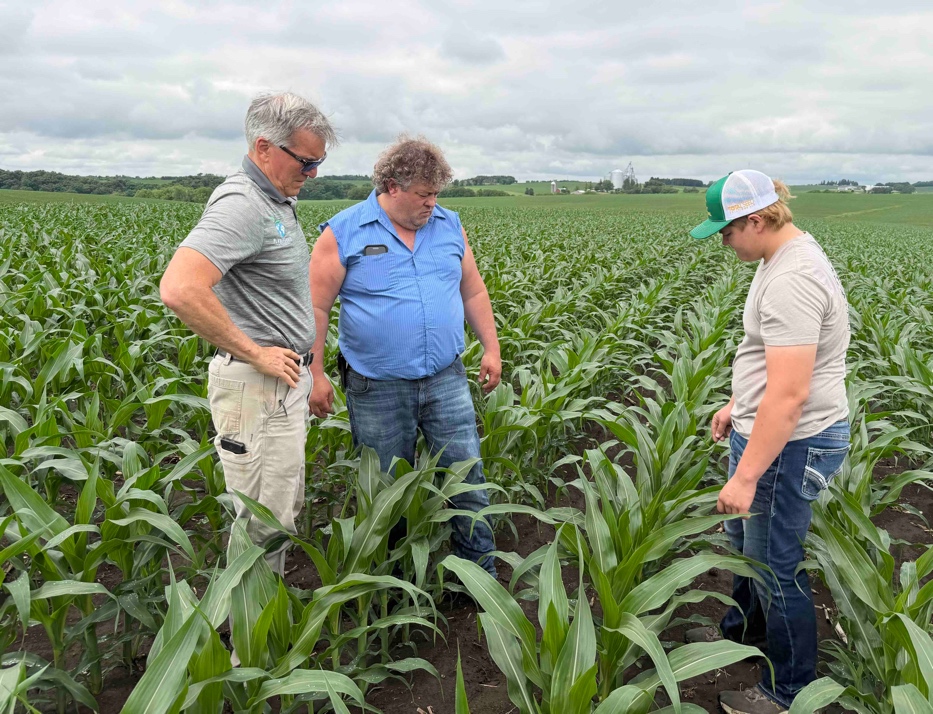
Source: Planet Earth Agronomy sent via AgPR--the news distribution service for agriculture MINERAL POINT, Wis. -- As corn yields increased on Schubert Farms near Mineral Point, Wis., the buildup of residue once created significant challenges for planting and stand establishment of the following soybean crop. Not anymore. To view a video click here. "I tried 20 gallons of Trashbreaker five or six years ago and saw results that I liked," remembers Mike Schubert, who operates the farm with his sons Luke and Ryan and his father Jim. "The next year I bought a half a tote, and the following year I sprayed three-quarters of my acres minus where we deep-ripped. And now in the past two years I sprayed every acre of cornstalks we had." Schubert says he went all-in with the biological residue management product when he saw reliable - and remarkable - benefits in easier planting, better emergence and a more even stand. "It's just phenomenal. When you plant into the corn stalks in the spring, you don't fight getting through residue with the planter," he says. "The soil warms up, dries out quicker and the crops emerge and get going a lot better where we've sprayed the Trashbreaker versus where we have not. It's a game changer." For Larry Fiene, Planet Earth Agronomy Founder and CEO, that sort of satisfying affirmation comes after decades of agronomic study of residue management across millions of crop acres. As the benefits have piled up and clearly shown in Planet Earth's plot trials and full-field research, it became obvious the product needed a new name: Carbon Cycle™. "It's boosting early root development, it's converting residue into plant nutrition faster, it's saving farmers diesel fuel, and now we've seen results over the past five years that show it helping to reduce plant pathogens in the soil," explains Fiene. "Soil DNA from Carbon Cycle treated fields and plots show lower levels of pathogens, likely due to competition from the microbes applied with Carbon Cycle," Fiene explains. "The Carbon Cycle microbes are doing more than just nutrient cycling. Specific pathogen species like Tar Spot and Anthracnose measured using soil DNA testing from both Biome Makers and Trace Genomics are lower in the Carbon Cycle treatments than in the untreated trials." Fiene explains that when the plants aren't fighting off nematodes and diseases, they have extra energy to make a bigger ear and to fill bean pods to help increase yields at the end of the season. For the Schubert family, adding Carbon Cycle to a sprayer application following harvest, has meant reducing tillage and boosting yields due to the rapid breakdown of the corn fodder. Luke Schubert has been planting soybeans on the 7,000-acre farm in recent years and has noticed the clear difference. "We mainly minimal-till everything on corn stalks, but there is one farm where we decided not to till last fall because of erosion problems," he says. "We just did our Carbon Cycle application over top of it and this spring I was very surprised. I had no problem planting right into that no-till ground with the Carbon Cycle. I was astonished with the ease of planting and emergence was very good in the field." The trash wasn't there, says Luke, and he never had a problem getting out and unplugging row cleaners or anything like that. "We used to struggle with emergence in heavy residue spots," he says. "Now, even in the valleys and ravines, the crops don't skip a beat. There's no trash for the crop to compete with." Beyond planting ease and improved stand establishment with Carbon Cycle, valuable nitrogen, potassium and phosphorus are released from the broken-down residue to benefit the soybeans. "The nutrients are there and they're readily available," Luke said. "It does an amazing job." About Source: ____ sent via AgPR--the news distribution service for agriculture Planet Earth Agronomy (www.planetearthagronomy.com) is an agronomic consulting and new product development business providing quality products, outstanding insight, and best-in-class service to farm businesses seeking to produce higher yields and greater return on investment while safeguarding their land for future generations. With research farms, offices and warehouses in Wisconsin and Nebraska, Planet Earth Agronomy is devoted to bringing proven innovative technology to growers seeking to earn more from every acre they farm. For more information, visit www.planetearthagronomy.com. Tweet |
|
|
|
|
|
|
|
|
|||||||||||||