|
 |
|
|
|||


|
 |
|

Nov. 6, 2026
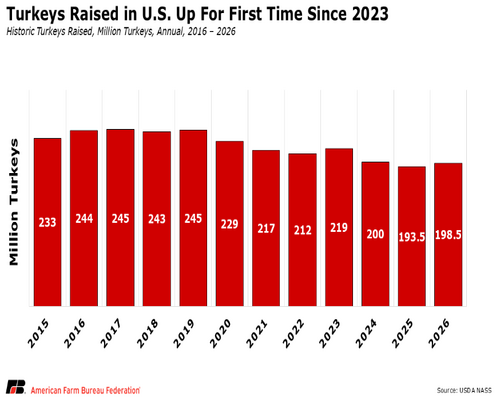
By Bernt Nelson, Economist, American Farm Bureau Federation Key Takeaways The U.S. turkey industry is recovering, with turkeys raised and production increasing for the first time since recent disease-related losses reduced supplies. Stronger domestic consumption, growing exports and lower cold storage inventories have improved returns for growers. Disease continues to challenge turkey growers, impacting flock performance and posing ongoing biosecurity risks. Higher feed costs and expanding turkey production could create headwinds for turkey growers in 2027 even as demand remains firm. After two years of shrinking supplies, the U.S. turkey industry is showing signs of recovery. More birds are being raised, production is increasing and demand remains strong in both domestic and export markets. Those factors have helped support turkey markets and improve returns for growers. However, disease challenges and higher feed costs continue to create uncertainty as the industry works to rebuild. Supplies & Production USDA's Turkeys Raised report estimates U.S. turkey farmers raised about 198.5 million turkeys in 2026, up 5 million birds, or about 3%, from 2025. This marks the first increase in the number of turkeys raised since 2023. Minnesota, North Carolina, Arkansas, Indiana and Missouri accounted for about 68% of all turkeys raised in 2026. Read More. Tweet |
|
|
|
|
|
|
|
|
|||||||||||||